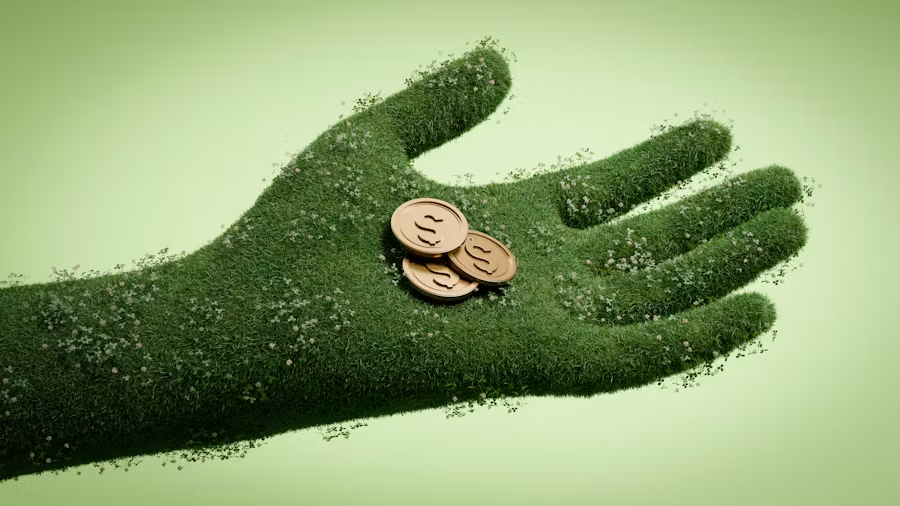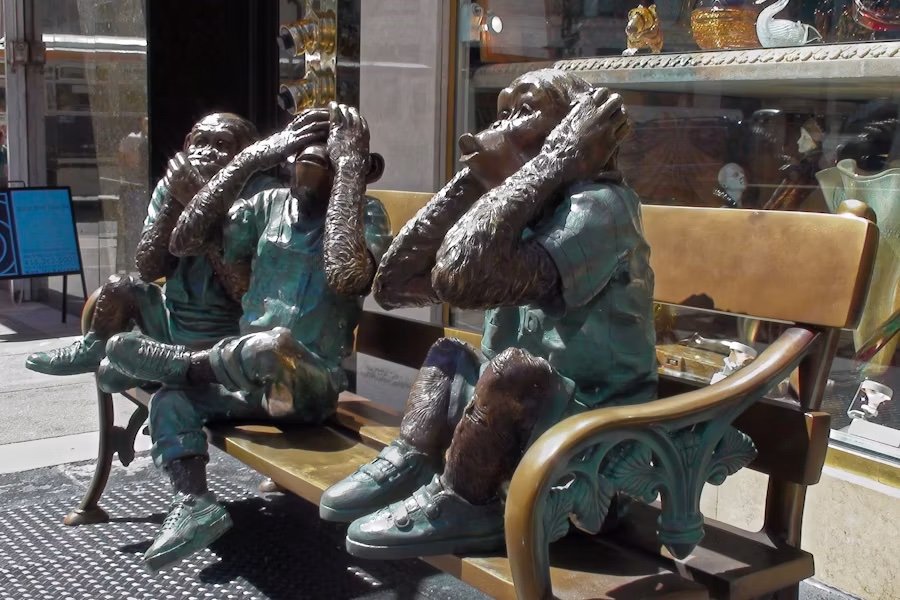

Illustrators, musicians, photographers, writers, programmers: digital creators turned the internet into a cultural space. Now many of them watch their life’s work being fed into A.I. models – without consent, without credit, without a cent of compensation. And afterwards the machine that learned from them competes against them for their own customers.
Dispossession at Data Scale
What is happening here bears an old name in new clothing: the use of other people’s property without permission or payment – only a billion times over. A.I. corporations harvest works because they can, and call it progress. Yet the value of their models stems to a considerable degree from the training data – that is, from the work of real human beings. Whoever skims off this value without giving the originators a share is not practising innovation but redistribution from the bottom to the top: from millions of creatives to a few platforms.
Entrepreneurs of the Mind
Digital creators embody what a free economy is at its best: people who, without employment, subsidy or protecting power, build a livelihood out of talent and diligence. They carry their risk themselves, build their audience with their own hands and live directly on the willingness of free people to pay. Whoever takes the market economy seriously must take these pioneers seriously – especially when powerful actors declare their rights negotiable.
The Social-Libertarian Answer: Property Applies Digitally Too
Social libertarianism is not against artificial intelligence – it is against helping oneself to other people’s property free of charge. Markets only work when property rights are enforced; that holds for workpieces as for works. Hence the A.I. age needs clear rules: training data only under licence, transparent disclosure of which works were used, and a fair, ongoing royalty distribution for all whose data train the models. Thus a genuine market for training data emerges, in which creatives are suppliers rather than prey – and A.I. development rests on contract instead of appropriation.
Technological progress and property rights are not enemies; their union is called the market economy. Social libertarianism wants both: capable A.I. and paid creatives. Think freely. Act justly. Cooperate meaningfully, and good will follow.